
Identify Old Stamps
And Find Out What They Are Worth
Found a box of old stamps or inherited a collection? This guide shows you how to identify old stamps the way philatelists do - by country, watermark, perforations, and printing method - and how to get the same answers in seconds with a photo.
The Short Answer: How Do You Identify an Old Stamp?
To identify an old stamp, you determine its country of origin, its year of issue, and its exact catalog variety. Philatelists do this by reading the inscription, checking the watermark, measuring the perforations, and examining the paper and printing method, then confirming the result in a reference catalog such as Scott, Stanley Gibbons, or Michel.
That manual process is rewarding, but it takes time and reference material. The faster route is to photograph the stamp with an identification app like StampSnap, which recognizes the design and shows the country, year of issue, rarity level, and an estimated value. Below you will find both approaches, so you can choose the one that fits your situation - or combine them.
How to Identify Old Stamps Manually
Work through these six checks in order. Each one narrows down which stamp you are holding.
Country and Inscription
Start with the text on the stamp. Most stamps name their country, but older issues can use historical names, abbreviations, or non-Latin scripts. Great Britain is the famous exception: as the country that invented the postage stamp, its stamps show only the monarch's portrait and no country name.
Watermark
Many classic stamps were printed on watermarked paper. Place the stamp face down on a dark surface, or use watermark detection fluid, to reveal the pattern. Two stamps that look identical from the front can be entirely different catalog numbers because of the watermark.
Perforations
A perforation gauge measures the number of perforation holes per two centimeters. Classic issues were often released with several perforation types, and the measurement can be the difference between a common stamp and a scarce variety worth far more.
Paper and Printing Method
Engraved stamps show fine raised lines you can feel with a fingertip, while lithographed and typographed stamps look flatter. Paper types such as wove, laid, or chalky paper also matter. These production details help pin down the exact issue and its date.
Cancellations and Postmarks
A postmark is a small historical record. Town names, dates, and cancellation styles confirm when and where a stamp was used. On some classic issues, a clear, dated postmark makes identification much easier and can even add collector appeal.
Catalogs as the Final Check
Philatelists traditionally confirm their findings in standard reference catalogs such as Scott (United States), Stanley Gibbons (United Kingdom), and Michel (Germany). These list issues by country and year with distinguishing details for each variety.
Tip: If a stamp looks unusual or particularly old, treat it gently and identify it before doing anything else. Our guide to rare stamp identification explains which details separate an ordinary stamp from a genuine rarity.
Dating Old Stamps by Era
Even before you identify the exact issue, the look of a stamp tells you roughly when it was made.
1840 - 1900: The Classic Era
Stamp collecting begins here. Great Britain issued the Penny Black, the world's first adhesive postage stamp, in 1840, and the United States followed with its first stamps in 1847. Classic era stamps are typically engraved, imperforate or coarsely perforated, and printed in a single color.
1900 - 1940: Early Modern Issues
Postal services expanded worldwide and stamps became more varied, with commemoratives, airmail issues, and multi-color printing appearing. Many sought-after rarities and printing errors come from this period.
1940 - 1970: Mid-Century Stamps
Wartime issues, new nations, and changing borders make this era fascinating to identify. Country names and currencies changed frequently, so inscriptions from this period often need careful reading.
1970 - Today: Modern Stamps
Modern stamps were printed in enormous quantities, so most have modest value. They are still worth identifying, though, because errors and limited issues from recent decades can surprise you.
Want to go deeper into a specific period? Browse our stamp identification guides by era or explore identification guides by country.
Inherited a Stamp Collection? Do This First
Inherited albums are the most common reason people search for help identifying old stamps. A calm, methodical approach protects both the sentimental and financial value.
Do not throw anything away yet
Keep albums, loose stamps, envelopes, and old letters together. Covers (complete envelopes) and original albums can be worth more than the individual stamps they contain.
Handle stamps with care
Use stamp tongs instead of fingers, keep stamps dry and out of direct sunlight, and never try to peel stamps off paper or clean them. Damage from careless handling permanently reduces value.
Get an overview before selling
Sort the collection roughly by country and era, then identify the stamps so you know what you actually have. Most collections are a mix of common material with a few better items hiding inside.
Identify first, value second
You cannot value a stamp you have not identified. Once you know the country, year, and catalog identity, you can research realistic prices and decide whether a professional appraisal is worthwhile.
New to the hobby? Our beginner's guide to stamp collecting covers handling, storage, and the essential tools in more detail.
The Fast Way: Identify Old Stamps with a Photo
StampSnap uses image recognition to do the identification work for you. Photograph a stamp and the app shows the country of origin, year of issue, design details, rarity level, and an estimated value.
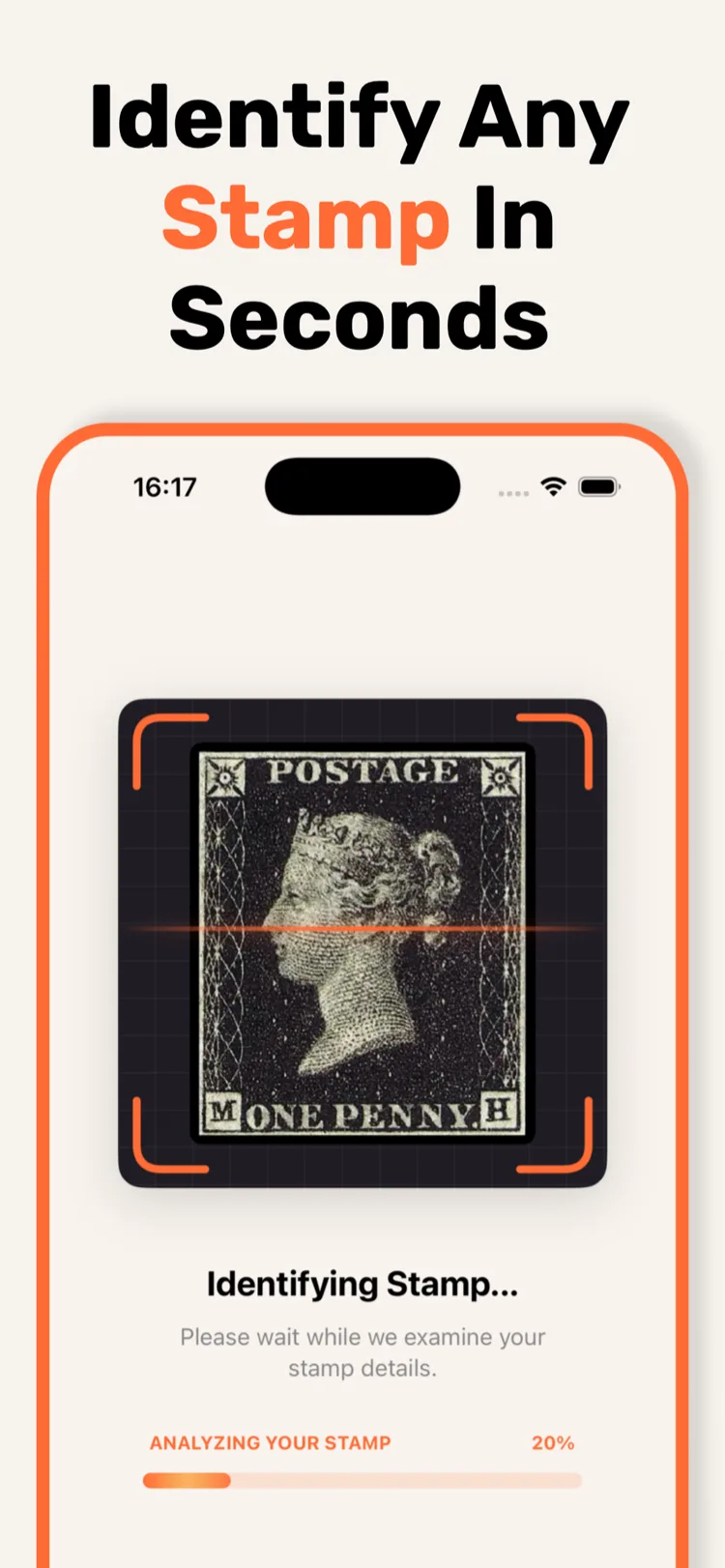
Photograph the stamp
Use the camera or upload a photo from your library. The stamp can stay in its album - there is no need to remove it.
See country, year, and rarity
The app recognizes the design and shows where and when the stamp was issued, along with its design details and rarity level - even for foreign stamps in scripts you cannot read.
Get an estimated value
Each identified stamp comes with estimated value insights, so you know which stamps deserve a closer look. For a deeper dive into pricing, see our stamp value scanner guide.
Build a digital catalog
Every scan is saved to your history. Organize stamps into digital albums, track your collection's total value, and filter by country, year, or value.
From Mystery Stamp to Full Answer
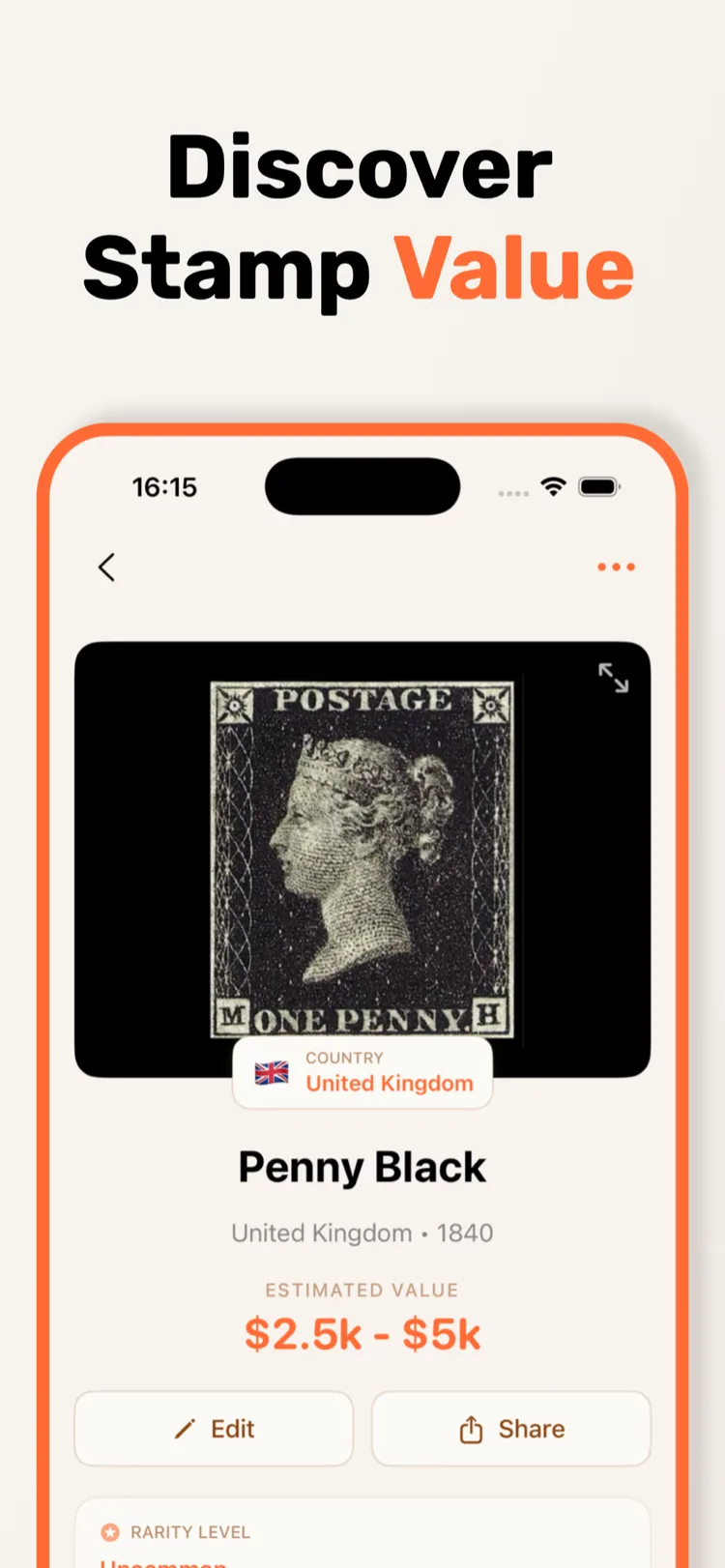
The screenshot on the right shows a result for the Penny Black, the world's first postage stamp from 1840: country of origin, year of issue, rarity, and an estimated value range, all from a single photo. The same flow works for any stamp in a shoebox or inherited album, whether it is a classic rarity or an everyday definitive.
StampSnap is free to download, with a premium subscription required for full features. It works on iPhone, supports 16 languages, and holds a 4.5 star rating on the App Store.
Are Old Stamps Automatically Valuable?
Not necessarily. Age alone does not make a stamp valuable - many 19th century stamps were printed in huge quantities and remain inexpensive today. What drives value is the combination of rarity, condition, and collector demand. A scarce variety in fresh condition can be worth many times more than the same design with a heavy cancellation or a thin spot.
That is exactly why identification matters. Two stamps that look nearly identical can sit at opposite ends of the price scale because of a watermark, a perforation measurement, or a printing variety. Once you know precisely which stamp you have, you can look up realistic values instead of guessing.
To understand these factors in depth, read what makes stamps valuable, or browse our overview of notable stamp values to see what the top end of the market looks like.
Old Stamps Value: A Realistic Price List
Most old stamps are worth under a few dollars. The reference list below shows what the famous exceptions have achieved, so you know what the top of the market looks like - each entry links to a full guide with identification details.
| Stamp | Country | Year | Reference value |
|---|---|---|---|
| British Guiana 1c Magenta | British Guiana | 1856 | $8.3 million |
| Z Grill | United States | 1868 | $3 million |
| Bull's Eye | Brazil | 1843 | $2.8 million |
| Treskilling Yellow | Sweden | 1855 | $2.3 million |
| Basel Dove | Switzerland | 1845 | $2.3 million |
| Mauritius Post Office | Mauritius | 1847 | $1.6 million |
| Baden 9 Kreuzer Error | Germany | 1851 | $1.5 million |
| Inverted Jenny | United States | 1918 | $1.35 million |
| Mauritius 2d Blue | Mauritius | 1847 | $1.1 million |
| Chinese Red Revenue | China | 1897 | $889,000 |
| Hawaiian Missionaries | Hawaii | 1851 | $750,000 |
| Cape of Good Hope Error | South Africa | 1861 | $500,000 |
| Canada 12d Black | Canada | 1851 | $350,000 |
| Scinde Dawk | India | 1852 | $50,000-200,000 |
| Japanese Dragon Stamps | Japan | 1871 | $25,000-150,000 |
| Western Australia Inverted Swan | Australia | 1854 | $80,000 |
| Columbian Exposition | United States | 1893 | $15,000-45,000 |
| Three Skilling Banco | Sweden | 1855 | $45,000 |
| French Ceres | France | 1849 | $35,000 |
| Austrian Mercury | Austria | 1851 | $28,000 |
| Sardinian Horseman | Italy | 1851 | $22,000 |
| Spanish Isabella | Spain | 1851 | $18,000 |
| Russian Imperial | Russia | 1857 | $16,000 |
| Belgian Epaulettes | Belgium | 1849 | $12,000 |
| Two Penny Blue | United Kingdom | 1840 | $1,500-8,000 |
| Penny Black | United Kingdom | 1840 | $3,000-7,000 |
Values are documented results or catalog references for specific examples in specific condition - not a promise for a similar-looking stamp. Condition, variety and authenticity decide the real price.
Want the full rankings? Browse the most valuable stamps in the world or the most valuable US stamps. Selling? See which rare stamps collectors are looking for.
Identifying Old Stamps FAQ
How can I identify an old stamp with no country name?
Stamps without a country name are usually from Great Britain, which never prints its name on stamps because it issued the world's first stamp in 1840. Otherwise, look at the currency, the portrait, and the script used in the inscription. If the text is in a script you cannot read, photographing the stamp with StampSnap is the quickest way to find the country of origin.
Can I identify old stamps from a picture?
Yes. StampSnap identifies stamps from a photo taken with the camera or uploaded from your photo library. The app recognizes the design and shows the country, year of issue, design details, rarity level, and estimated value. A sharp, well-lit photo of the full stamp gives the best results.
Should I remove old stamps from envelopes or album pages?
No, not before identifying them. Stamps on complete envelopes (covers) can be worth more than the stamp alone, especially with interesting postmarks, and soaking or peeling can cause permanent damage. Identify everything in place first, then decide what, if anything, to remove.
How old does a stamp have to be to be valuable?
There is no age threshold. Value comes from rarity, condition, and demand rather than age alone. Some stamps from the 1840s cost only a few dollars because millions survive, while certain modern errors are highly sought after. Identification tells you which category your stamp falls into.
Do I need a professional appraisal for an inherited collection?
Usually only for the best items. Start by identifying the collection yourself so you know what it contains, then have any stamps that appear rare or high in value examined by a professional philatelic appraiser before selling. An informed overview also protects you from underselling to a quick buyer.