
Stamp Values
What Makes a Stamp Valuable? 7 Key Factors
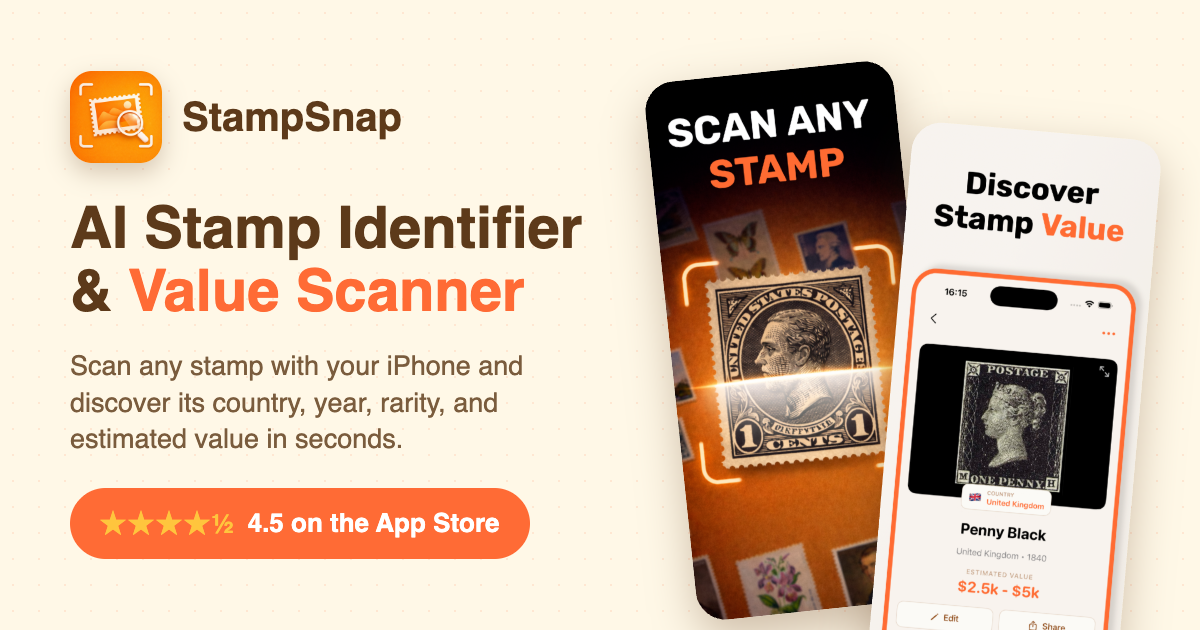
Why is one stamp worth a few cents while another sells for millions? Understanding what drives stamp value helps collectors make smart decisions, identify hidden treasures, and build meaningful collections. Here are the seven key factors that determine a stamp's worth.
Factor 1: Rarity
Rarity is often the primary driver of extreme stamp values. But rarity alone doesn't guarantee value - the stamp must also be desirable.
Types of Rarity
Production Rarity
- Limited print runs
- Stamps recalled shortly after issue
- Experimental or provisional issues
Survival Rarity
- Many printed but few survive
- Natural disasters destroyed stocks
- Paper drives consumed stamps
- Political upheaval caused destruction
Condition Rarity
- Common stamps rare in top grades
- Mint never hinged classic stamps
- Stamps with full original gum
Famous Rare Stamps
| Stamp | Quantity Known | Approximate Value |
|---|---|---|
| British Guiana 1c Magenta | 1 | $8.3 million |
| Treskilling Yellow | 1 | $2.3 million |
| Inverted Jenny | ~100 | $1.35 million |
| Baden 9 Kreuzer Error | 4 | $1.4 million |
The Rarity Sweet Spot
Interestingly, stamps with only 1-5 known examples can actually be too rare:
- Insufficient supply for market demand
- Few collectors can compete
- May trade privately, avoiding auctions
Stamps with 20-200 known examples often achieve the highest prices because:
- Enough exist to create market interest
- Still rare enough to be special
- Multiple collectors can realistically compete
Factor 2: Condition
Condition dramatically affects value, sometimes more than any other factor.
The Condition Premium
A stamp's price multiplies as condition improves:
- Poor condition: 10% of catalog
- Fine: 50% of catalog
- Very Fine: 100% of catalog
- Superb: 300-500%+ of catalog
Key Condition Factors
Centering
- How well the design sits within perforations
- Perfect centering is rare on older stamps
- Modern stamps expected to be well-centered
Gum (Mint Stamps)
- Original gum vs. no gum vs. regummed
- Never hinged premium (post-1920)
- Gum condition (fresh, toned, cracked)
Freshness
- Bright, original colors
- No fading or oxidation
- No staining or foxing
Completeness
- All perforations intact
- No tears, thins, or creases
- No repairs or alterations
Condition Example
A US 1918 Inverted Jenny in different conditions:
- Average condition: $200,000-300,000
- Very Fine: $500,000-700,000
- Superb: $1,000,000+
Factor 3: Historical Significance
Stamps connected to important historical moments or figures command premiums.
Historical Connection Types
First Issues
- World's first stamp (Penny Black)
- First stamps of new nations
- First airmail stamps
- First commemorative stamps
Historical Events
- War-related stamps
- Revolutionary period issues
- Stamps from ceased nations
- Political transition stamps
Famous People
- Stamps featuring notable figures
- Stamps owned by famous collectors
- Stamps with documented historical use
Example: Historical Premium
The Hawaii Missionaries (1851) are valuable partly because:
- First stamps of Hawaii
- Used by actual missionaries
- Many had fascinating journeys
- Connected to romantic Pacific history
Factor 4: Errors and Varieties
Printing mistakes often create the most valuable stamps.
Types of Errors
Inverted Centers
- Bicolor stamps with one element upside down
- Visually dramatic
- Usually very rare
- Inverted Jenny is most famous
Missing Colors
- One or more colors failed to print
- Can completely change stamp's appearance
- Sometimes discovered years later
Wrong Paper or Watermark
- Stamp printed on incorrect paper
- Wrong watermark variety
- Can be subtle but valuable
Perforation Errors
- Imperforate stamps
- Misperforated stamps
- Double perforations
Why Errors Are Valuable
- Scarcity - Usually only a few escape quality control
- Drama - Visual impact attracts attention
- Story - Each error has a discovery tale
- Completeness - Specialists need them for collections
Factor 5: Demand
Value requires buyers. Even rare stamps need collector interest.
Demand Drivers
Country Popularity
- US, UK, and Germany stamps have strong global demand
- Large collector bases drive prices
- Emerging markets (China) create new demand
Thematic Interest
- Popular topics: space, Disney, sports
- Fashion in collecting changes
- Nostalgia factors affect demand
Investment Interest
- Blue-chip stamps attract investors
- Trophy stamps gain from wealth creation
- Certified stamps easier to trade
Demand Changes Over Time
Collecting trends shift:
- 1990s: Eastern European stamps boomed
- 2000s: Chinese stamps surged
- 2010s: Quality over quantity emphasized
- 2020s: Certified stamps premium increasing
Factor 6: Provenance
A stamp's ownership history affects its value and desirability.
Types of Provenance
Famous Collections
- Stamps from renowned collectors
- Ex-Ferrari, ex-Tapling, etc.
- Museum deaccessions
Historical Significance
- Used on famous covers
- Connected to historical figures
- Documented interesting journeys
Continuous Documentation
- Chain of ownership documented
- Auction records available
- Previous expertization
Provenance Premium
Stamps from famous collections typically sell for:
- 10-30% premium for minor collections
- 50%+ premium for legendary collections
- Can double price for iconic provenances
Example: The Ferrari Effect
Stamps from the Ferrari collection (dispersed 1990s-2000s) still command premiums because:
- Represented the finest available
- Quality guaranteed
- Prestige of ownership continues
Factor 7: Authentication and Certification
In today's market, certified stamps command significant premiums.
Why Certification Matters
Authentication
- Expert verification the stamp is genuine
- Protection against forgeries
- Peace of mind for buyers
Grading
- Standardized condition assessment
- Comparable to other certified stamps
- Numeric grades enable easy comparison
Encapsulation
- Physical protection
- Tamper-evident holders
- Grade guaranteed
Certification Premium
Certified stamps often sell for:
- 20-50% more than uncertified equivalents
- Even more for high grades
- Especially important for valuable stamps
Major Certification Services
- Philatelic Foundation (PF)
- Professional Stamp Experts (PSE)
- American Philatelic Expertizing Service (APEX)
- British Philatelic Association (BPA)
Putting It All Together
Value Formula
While not mathematical, value generally follows:
Base Value × Condition × Rarity × Demand × Provenance × Certification = Market Price
Finding Hidden Value
To find undervalued stamps:
- Learn varieties - Subtle differences matter
- Understand grading - Condition premiums are huge
- Study market - Know what's trending
- Check carefully - Errors hide in plain sight
- Document provenance - Your stamps may have history
Building Value in Your Collection
Do:
- Focus on condition over quantity
- Buy the best you can afford
- Keep documentation
- Store properly
- Consider certification for valuable items
Don't:
- Buy purely for investment
- Ignore condition problems
- Overpay for common stamps
- Neglect proper storage
Conclusion
Stamp values result from the complex interaction of rarity, condition, history, errors, demand, provenance, and certification. Understanding these factors helps you:
- Recognize potential treasures
- Make informed purchases
- Build a meaningful collection
- Avoid overpaying for common material
Remember that the stamp market, like all collectibles markets, evolves over time. What's undervalued today may be sought-after tomorrow. Focus on stamps that genuinely interest you, maintain high standards for condition, and your collection will likely prove rewarding both personally and financially.
StampSnap Editorial Team
Product and Editorial Team
StampSnap
The StampSnap Editorial Team creates practical stamp identification and collecting guides. Important identifications and values should be checked against specialist catalogues, provenance records and professional expertization.
Editorial standards
- •Separates identification clues from value estimates
- •Labels estimates and uncertainty clearly
- •Recommends specialist verification for important finds
- •Updates product facts when the app changes