
Collecting Tips
How to Sell Your Stamp Collection for Maximum Value
Whether you've inherited a collection, are downsizing, or simply want to cash in on your investment, selling stamps requires strategy to maximize returns. This guide covers everything from initial assessment to closing the sale. Not sure whether your material is in demand? Start with our overview of rare stamps wanted by collectors.
Step 1: Assess What You Have
Before selling, understand what you're working with.
Quick Collection Assessment
Collection Types:
| Type | Typical Value | Best Selling Method |
|---|---|---|
| Childhood accumulation | Low ($10-100) | Lot sale to dealer |
| Focused country collection | Moderate ($100-5,000) | Auction or dealer |
| Specialized collection | High ($1,000+) | Specialty auction |
| Investment quality stamps | Very high | Major auction house |
Initial Sorting
-
Separate by category:
- Mint vs. used
- Country groups
- Complete sets vs. singles
- Covers and postal history
-
Identify potentially valuable items:
- Older stamps (pre-1940)
- High face value stamps
- Complete sets in original packaging
- Unusual items (errors, varieties)
-
Note overall condition:
- Album condition
- Stamp mounting method
- General quality level
When to Get Professional Help
Consider professional appraisal if:
- Collection includes stamps valued over $500 individually
- You've inherited an unfamiliar collection
- Collection was built by a serious collector
- You see stamps from valuable countries (US, UK, Germany, China)
Step 2: Get Accurate Valuations
DIY Valuation Methods
Catalog Values
- Scott Catalog (US standard)
- Stanley Gibbons (British Commonwealth)
- Michel (Germany and Europe)
- Note: Catalog values are retail, not selling prices
Online Research
- eBay sold listings (actual selling prices)
- Auction archives (for better stamps)
- Dealer websites (retail asking prices)
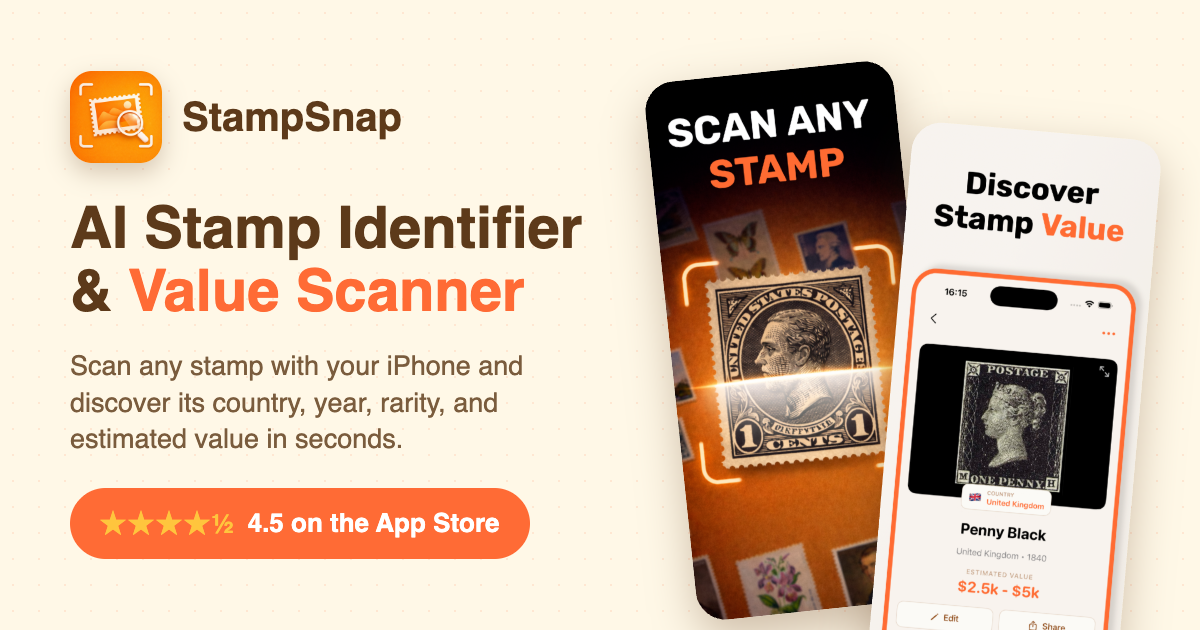
StampSnap App
- Quick identification
- Approximate values
- Good starting point
Understanding "Value"
Important Distinction:
- Catalog value ≠ What you'll receive
- Retail price ≠ What dealers pay
- Auction estimate ≠ Final hammer price
Realistic Expectations:
- Common stamps: 5-20% of catalog
- Better stamps: 30-60% of catalog
- Premium stamps: 70-100%+ of catalog
- Rare stamps: Can exceed catalog
Professional Appraisals
When Worth the Cost:
- Collections valued over $5,000
- Insurance documentation needed
- Estate settlement requirements
- Legal purposes
Finding Appraisers:
- American Society of Appraisers members
- American Philatelic Society dealer members
- Established auction houses (often free for valuable collections)
Step 3: Choose Your Selling Method
Option 1: Sell to a Dealer
Best For:
- Quick sale needed
- Moderate value collections
- Convenience priority
Pros:
- Immediate payment
- No selling effort required
- Professional handling
Cons:
- Lowest return (typically 30-50% of retail)
- May cherry-pick best items
- Single offer may not reflect full value
Tips for Dealer Sales:
- Get multiple offers
- Ask about consignment options
- Understand dealer's specialty
- Get written offers
Option 2: Auction Houses
Best For:
- Valuable individual stamps
- Specialized collections
- Maximum price potential
Major Auction Houses:
- Robert A. Siegel (US)
- Daniel F. Kelleher
- H.R. Harmer
- Spink (UK and international)
- David Feldman (Switzerland)
Pros:
- Competition drives prices
- Expert lotting and description
- Global buyer reach
- Professional marketing
Cons:
- Seller's commission (15-20%)
- Buyer's premium reduces bids
- Time to sale (3-6 months)
- Minimum value requirements
Auction Tips:
- Choose house specializing in your material
- Understand all fees before consigning
- Discuss reserve prices
- Ask about unsold lot procedures
Option 3: Online Marketplaces
eBay
- Largest audience
- You control pricing and timing
- Fees around 13-15%
- Requires effort and knowledge
HipStamp
- Stamp-specific marketplace
- Knowledgeable buyers
- Lower fees than eBay
- Smaller audience
Delcampe
- Strong in Europe
- Good for international material
- Reasonable fees
Pros of Online Selling:
- Control over process
- Potentially highest returns
- Direct buyer interaction
Cons:
- Time-intensive
- Requires knowledge to describe accurately
- Shipping and handling effort
- Buyer disputes possible
Option 4: Stamp Shows
Best For:
- Interacting with multiple dealers
- Quick sales
- Learning experience
How It Works:
- Bring collection to stamp show
- Visit multiple dealer booths
- Get offers, compare, negotiate
- Can sell on the spot
Tips:
- Research show schedule in advance
- Bring organized, presentable material
- Be prepared to negotiate
- Don't accept first offer without comparison
Option 5: Private Sales
Best For:
- Knowing a specific buyer
- Collector-to-collector sales
- Avoiding fees
Where to Find Buyers:
- Stamp clubs
- Online collector forums
- Specialized collecting societies
- Social media groups
Pros:
- No middleman fees
- Direct negotiation
- Often fair prices
Cons:
- Limited buyer pool
- Must handle all aspects yourself
- Payment security concerns
Step 4: Prepare for Sale
Documentation
Gather Everything:
- Original purchase receipts
- Previous certificates
- Catalog pages or annotations
- Any provenance information
Presentation
For Dealers/Auctions:
- Keep in current arrangement
- Don't remove from albums
- Include all accessories (stock books, mounts)
- Present clean and organized
For Online Sales:
- High-quality photographs essential
- Clean, accurate descriptions
- Proper identification of items
- Honest condition reporting
Organizing for Maximum Value
Better Stamps:
- Should be identified individually
- Certificates add value
- Can be lotted separately
Common Material:
- Better sold as lots
- Group by country or topic
- Price realistically
Step 5: Price Strategy
Setting Prices
Online Sales:
- Research sold comparables
- Price 10-20% above floor
- Build in negotiation room
- Consider "Best Offer" option
Auctions:
- Discuss estimates with auction house
- Understand reserve policies
- Lower reserves often mean higher final prices
What Affects Final Price
Increases Price:
- Certification
- Better than typical condition
- Complete sets
- Interesting provenance
- Good photographs
- Detailed, accurate descriptions
Decreases Price:
- Condition problems
- Missing key items from sets
- Poor organization
- Inadequate descriptions
- Wrong selling venue
Step 6: Complete the Sale
For Dealer Sales
- Get written offer
- Verify dealer reputation
- Agree on payment terms
- Get receipt for items sold
- Retain records for taxes
For Auctions
- Sign consignment agreement
- Understand all fees
- Approve catalog descriptions
- Set appropriate reserves
- Wait for sale and settlement
For Online Sales
- Ship promptly after payment clears
- Use appropriate packaging
- Insure valuable shipments
- Confirm delivery
- Request feedback
Special Situations
Selling an Inherited Collection
First Steps:
- Don't rush - learn what you have
- Don't throw anything away
- Get estate appraisal for tax purposes
- Consider keeping meaningful items
Common Mistakes:
- Selling too quickly
- Accepting first offer
- Not understanding value
- Disposing of "worthless" items that had value
Selling Investment Stamps
Considerations:
- Timing matters - watch market conditions
- Major auctions for best exposure
- Certification essential
- Tax implications significant
Disposing of Low-Value Collections
Options:
- Donate to stamp clubs (youth programs)
- Sell as bulk lots
- Give to beginning collectors
- Some charities accept stamp donations
Tax Considerations
US Tax Rules
Capital Gains:
- Stamps held over 1 year: long-term rates
- Stamps held under 1 year: ordinary income
- Collectibles maximum rate: 28%
Record Keeping:
- Document purchase prices
- Keep sale records
- Consult tax professional for large sales
Charitable Donations:
- Can deduct fair market value
- Appraisal required over $5,000
- Must be to qualified charity
Conclusion
Selling a stamp collection successfully requires:
- Assessment - Know what you have
- Valuation - Understand realistic values
- Strategy - Choose the right selling method
- Preparation - Present material properly
- Patience - Don't rush into bad deals
Whether your collection is worth $100 or $100,000, taking time to sell properly can significantly increase your returns. Consider the effort versus reward for each selling method, and don't hesitate to seek professional help for valuable material.
Remember: the right buyer for your stamps is out there. Your job is finding them and presenting your collection in the best possible light.
StampSnap Editorial Team
Product and Editorial Team
StampSnap
The StampSnap Editorial Team creates practical stamp identification and collecting guides. Important identifications and values should be checked against specialist catalogues, provenance records and professional expertization.
Editorial standards
- •Separates identification clues from value estimates
- •Labels estimates and uncertainty clearly
- •Recommends specialist verification for important finds
- •Updates product facts when the app changes