
Collecting Tips
Beginner's Guide to Stamp Collecting
Stamp collecting, or philately, connects postal history, design, geography and careful research. This guide explains how to start a collection, handle stamps safely and choose a focus you will enjoy.
Why Collect Stamps?
Educational Value
Stamps offer windows into:
- World geography and history
- Art and culture
- Science and technology
- Political events and social changes
Research and Discovery
Collecting can help you:
- Learn how postal systems and countries changed
- Compare printing methods, watermarks and perforations
- Preserve small historical artifacts carefully
- Build a focused collection around subjects you enjoy
Accessibility
Unlike many collectibles, stamps offer:
- Entry points at every budget level
- Worldwide availability
- Established marketplaces
- Strong collector communities
Getting Started: Essential Equipment
Basic Tools
Stamp Tongs
- Never handle stamps with fingers
- Oil and moisture damage stamps
- Flat-ended tongs for general use
- Pointed tongs for delicate work
- Cost: $5-15
Magnifying Glass or Loupe
- 10x magnification recommended
- Reveals printing details
- Essential for identifying varieties
- Cost: $10-30
Perforation Gauge
- Measures perforations per 2 centimeters
- Critical for stamp identification
- Distinguishes between varieties
- Cost: $5-10
Watermark Detector
- Reveals hidden watermarks in paper
- Essential for British and Commonwealth stamps
- Fluid or electronic types available
- Cost: $15-50
Storage Supplies
Stock Books
- Strips hold stamps for viewing
- Available in various sizes
- Good for initial organization
- Not ideal for long-term storage
Albums
- Pre-printed pages for specific countries
- Mounts or hinges hold stamps
- Professional appearance
- More expensive but better protection
Mounts
- Clear plastic sleeves for stamps
- Protect stamps from handling
- Preserve gum and condition
- Essential for valuable stamps
Understanding Stamp Terminology
Condition Terms
Mint Never Hinged (MNH)
- Original gum, never mounted
- Highest value for modern stamps
- Post-1920 standard
Mint Hinged (MH)
- Original gum with hinge marks
- Common for older stamps
- Acceptable for classics
Used
- Postally used with cancellation
- Value depends on cancel type
- Some collectors prefer used
Fine, Very Fine, Superb
- Centering quality descriptions
- VF centered is standard
- Superb commands premiums
Collecting Terms
Definitives
- Regular issue stamps
- Long-term use
- Multiple printings
Commemoratives
- Special occasion stamps
- Limited printing periods
- Often larger formats
Errors
- Printing mistakes
- Inverts, missing colors
- Often highly valuable
Varieties
- Subtle differences between printings
- Paper types, shades, perforations
- Important for specialists
Building Your Collection
Approach 1: Worldwide General
Pros:
- Greatest variety
- Affordable entry
- Broad learning experience
Cons:
- Can become overwhelming
- Difficult to complete
- Less specialized knowledge
Approach 2: Single Country
Pros:
- Focused collecting
- Achievable completion goals
- Deep expertise development
Cons:
- May miss interesting areas
- Some countries expensive
- Limited scope
Approach 3: Thematic/Topical
Pros:
- Personal interest driven
- Cross-country collecting
- Always expanding
- Popular themes: space, sports, art, animals
Cons:
- No defined end point
- May lack systematic structure
- Catalog organization challenging
Approach 4: Time Period
Pros:
- Historical focus
- Defined boundaries
- Cross-country comparison
Cons:
- Some periods expensive
- May include unwanted material
- Requires historical knowledge
Where to Acquire Stamps
Free Sources
- Incoming mail
- Friends and family
- Approval services for beginners
Purchasing Options
Stamp Dealers
- Expert knowledge
- Quality guarantees
- Fair pricing
- Local and online options
Auction Houses
- Access to rarities
- Competitive pricing
- Requires knowledge
- Major houses: Siegel, Kelleher, Spink
Online Marketplaces
- eBay, HipStamp, Delcampe
- Wide selection
- Buyer protection programs
- Research sellers carefully
Stamp Shows
- Personal inspection
- Dealer negotiations
- Collector networking
- Educational programs
Caring for Your Collection
Proper Handling
- Always use tongs
- Work on clean surfaces
- Avoid direct sunlight
- Handle by edges when possible
Storage Environment
- 65-70°F temperature
- 50-60% relative humidity
- Away from light
- Pest-free location
Organization Methods
- Chronological
- By denomination
- Scott catalog number order
- Thematic groupings
Using Technology
Digital Tools
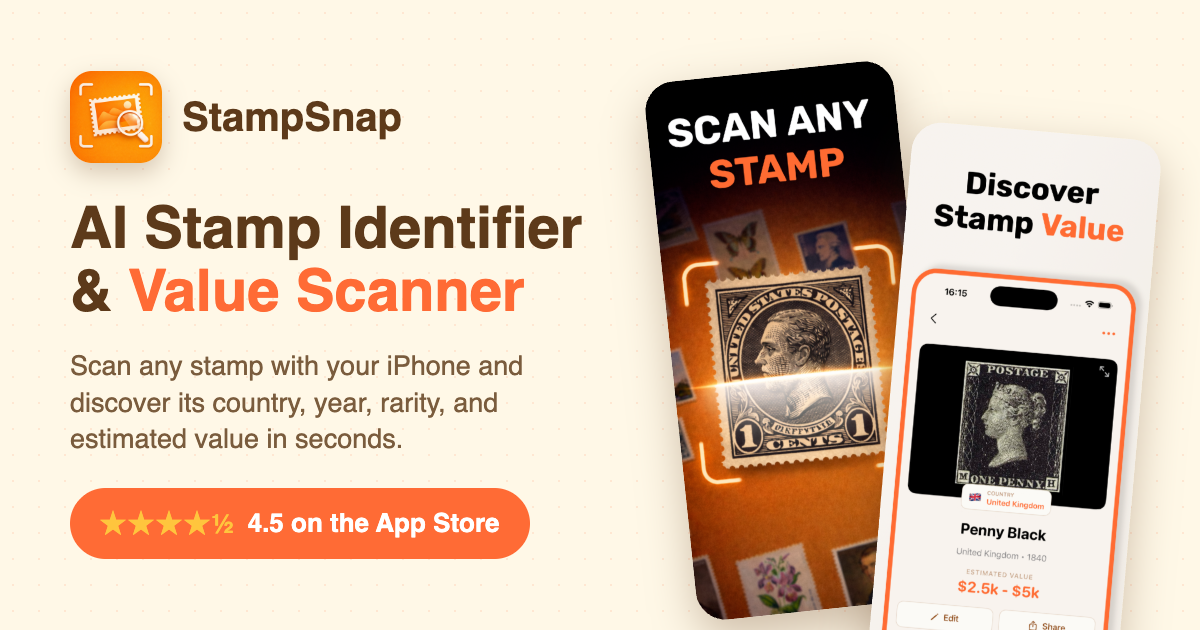
StampSnap App
- Instant stamp identification
- Value estimates
- Collection cataloging
- Expert resources
Online Catalogs
- Scott, Stanley Gibbons, Michel
- Digital subscriptions available
- Regular updates
- Price guides included
Online Communities
- Stamp forums and discussion groups
- Social media collector groups
- Virtual stamp shows
- Online auctions
Growing Your Knowledge
Recommended Resources
Books:
- "Fundamentals of Philately" by L.N. Williams
- Scott or Stanley Gibbons catalogs
- Country-specific handbooks
Organizations:
- American Philatelic Society
- Royal Philatelic Society London
- Local stamp clubs
Publications:
- Linn's Stamp News
- American Philatelist
- Gibbons Stamp Monthly
Common Beginner Mistakes
- Handling stamps without tongs - Causes oil damage
- Using hinges on modern stamps - Destroys MNH status
- Ignoring condition - Learning to grade is essential
- Overpaying for common stamps - Research before buying
- Poor storage - Climate control matters
- Not keeping records - Document purchases and values
Setting Goals
Consider setting collecting goals:
- Complete a specific set
- Acquire stamps from certain countries
- Build a thematic collection
- Participate in exhibitions
- Learn to expertize specific areas
Conclusion
Stamp collecting offers lifelong enjoyment and learning opportunities. Start with what interests you, invest in basic tools, and connect with other collectors. Whether your collection grows to museum quality or remains a personal pleasure, the journey of discovery is the true reward.
Welcome to the wonderful world of philately!
StampSnap Editorial Team
Product and Editorial Team
StampSnap
The StampSnap Editorial Team creates practical stamp identification and collecting guides. Important identifications and values should be checked against specialist catalogues, provenance records and professional expertization.
Editorial standards
- •Separates identification clues from value estimates
- •Labels estimates and uncertainty clearly
- •Recommends specialist verification for important finds
- •Updates product facts when the app changes